
Case Study
Assessing Azerbaijan’s readiness for participation under Article 6 of the Paris Agreement
Overview
Neyen supported the government of Azerbaijan by guiding the necessary steps to fully benefit from international carbon markets participation, especially Article 6, informed by an assessment of the country’s readiness in the areas of institutions, infrastructure, and strategies for carbon markets.
Through a rigorous analysis of Azerbaijan’s environmental targets, policies, and carbon market potential, we developed a roadmap that the Azerbaijani government can immediately adopt to start participating in international carbon markets.
The Story
Support the government in exploring pathways for market participation
Azerbaijan has made significant progress in defining its climate ambitions and aligning them with international frameworks. Its 2023 Nationally Determined Contribution (NDC) sets a conditional target of reducing greenhouse gas (GHG) emissions by 35% by 2030 and 40% by 2050 compared to 1990 levels. With over 80% of its emissions coming from the energy sector, and limited experience in carbon markets beyond a few Clean Development Mechanism (CDM) and voluntary market projects, the country now seeks to understand how carbon markets can support its decarbonization pathway.
To support this ambition, the World Bank, through the Ministry of Ecology and Natural Resources (MENR), commissioned an assessment to evaluate Azerbaijan’s readiness and strategic options for participating in international carbon markets under Article 6 of the Paris Agreement and the Voluntary Carbon Market (VCM).
Provide a decision framework for participation
Neyen supported the World Bank and the Government of Azerbaijan to identify opportunities, readiness gaps, and practical next steps for carbon market engagement.
This assessment applied two complementary analytical tools:
- Mitigation Action Assessment Protocol for International Transfer Readiness (MAAP-ITR) – to evaluate institutional and policy readiness.
- Decision Tree for Navigating Carbon Markets (DTNCM) – to help policymakers make informed decisions on whether, how, and when to participate in international carbon markets.
The DTNCM is a structured framework developed by a group of international institutions to simplify complex Article 6 requirements. The tool helps countries navigate questions such as whether they should begin with the more flexible voluntary market or aim directly for the more demanding Article 6 mechanisms. For Azerbaijan, this decision is particularly relevant given the institutional investment and technical capacity needed to authorize and track internationally transferred mitigation outcomes (ITMOs).
Analyze the policy landscape and sectoral opportunities
Strong commitments, limited implementation detail
The assessment began with a review of Azerbaijan’s climate policy framework, including its updated NDC, National Priorities for Socio-Economic Development, and National Adaptation Plan (NAP). These documents provide strong top-level commitments but limited detail on the quantitative targets or financing mechanisms that will deliver the NDC’s conditional goals.
Energy sector shows greatest mitigation potential
Using the DTNCM framework, the team assessed seven guiding questions covering market readiness, sectoral mitigation potential, carbon market operationalization, and the scope for authorization of ITMOs. The energy sector emerged as the most detailed and promising for future carbon market participation. With 81% of national emissions stemming from fossil energy use, transitioning this sector offers the largest mitigation potential and potential credit generation opportunities under both Article 6 and the VCM.
Offshore wind offers carbon credit potential
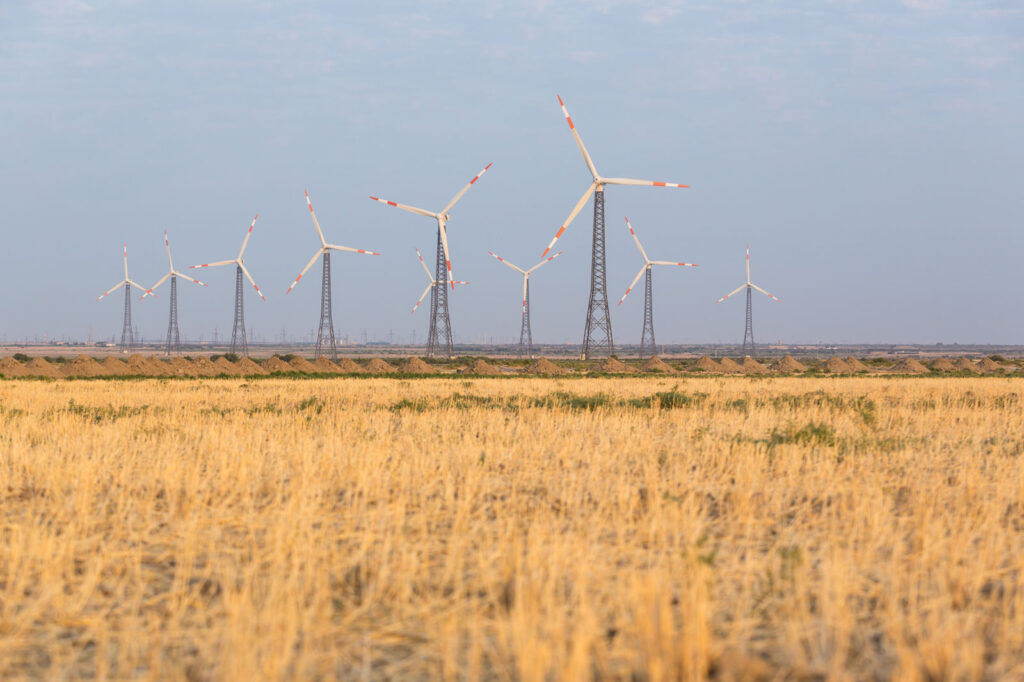
Planned renewable energy infrastructure, especially offshore wind power projects, was identified as an area of particular interest. Stakeholders in Baku expressed the government’s intention to explore whether these projects could be structured to attract international investment and potentially generate carbon credits
Emerging opportunities in agriculture and waste
While agriculture and waste represent smaller shares of emissions, they were also recognized as emerging opportunities, particularly as renewable energy becomes less attractive to buyers due to declining technology costs.
Using the MAAP-ITR tool to assess Azerbaijan’s readiness across four key modules:
1. Climate Change Strategy and NDC Alignment
Azerbaijan’s policy alignment scored well overall, with clear mitigation targets and sectoral priorities. However, there is no standalone long-term mitigation strategy beyond the NDC and a detailed implementation roadmap with defined financing and monitoring mechanisms.
2. Institutionalization
While a Designated National Authority (DNA) for Article 6.4 has been appointed, its functions and responsibilities remain undefined. Broader institutional roles, such as those responsible for bilateral agreements or long-term oversight, are yet to be clarified.
3. Policy Framework and Activity Cycle
The analysis found no dedicated national carbon market strategy or legal instruments specifying the authorization, accounting, and reporting processes required for Article 6 or the VCM.
4. Reporting and Infrastructure
Azerbaijan has not yet decided on a carbon registry solution. Although it fulfills basic reporting obligations under the Paris Agreement, further development of methodological guidance and MRV systems is needed to ensure transparency and prevent double counting.
Collectively, these findings suggest that Azerbaijan’s readiness level is nascent but progressing, with strong political commitment yet limited institutional and technical systems to operationalize market participation.
Formulate recommendations and next steps
Based on the DTNCM and MAAP-ITR results, a phased approach to carbon market readiness was proposed:
Short-term (within three years)
- Establish legal and institutional frameworks: Define mandates for a carbon market operative unit, develop a regulation or decree on authorization and ownership of ITMOs, and clarify inter-ministerial coordination mechanisms.
- Leverage voluntary carbon markets: Encourage pilot projects under recognized standards (Verra, Gold Standard) to build technical and procedural experience.
- Develop registry infrastructure: Explore options for a national registry or interim participation through international or third-party platforms.
- Engage in bilateral cooperation: Identify strategic partners under Article 6.2 for projects targeting methane reduction or energy efficiency in the gas sector.
Medium-term (three to five years)
- Integrate carbon markets into NDC implementation: Define which mitigation activities can be financed through carbon markets, and use lessons learned to strengthen future NDC updates.
- Promote regional collaboration: Engage in regional carbon market alliances similar to those in Africa and ASEAN to share knowledge and build collective capacity.
- Explore domestic carbon pricing instruments: Azerbaijan could consider integrating domestic or international offset credits into future compliance mechanisms such as an emissions trading system or carbon tax.
Drivers of change
Build capacity and institutional clarity
Through this assessment, Azerbaijan now has a structured understanding of its readiness level and the specific steps needed to engage confidently in international carbon markets. Establishing institutional roles, legal clarity, and MRV infrastructure will be the cornerstone for credible participation under Article 6.
Lessons Learned
The team understands the importance of active engagement with government officials to avoid delays and readily gain information. The World Bank as the client also emphasizes the interconnectedness between international carbon markets, as what has been done in this project, with domestic carbon pricing as another climate policy instrument, enriching the project, policy discussion and initiatives for Azerbaijan.
Additional project information
Client: Azerbaijan & the World Bank
Year: 2025
A series of consultation workshop was held as part of in-country mission, disseminating the results of the project to the government and validating the results, in May 2025.